
Marine protected areas are 'marine environments made up of the waters and their seabed as well as the stretches of coastline facing them, which are of significant interest due to their natural, geomorphological, physical and biochemical characteristics, with particular regard to marine and coastal flora and fauna, and due to their scientific, ecological, cultural, educational and economic importance' (Law No. 979/82 Defence of the Sea).
The Capo Carbonara Marine Protected Area (AMPCC) is located in the south-eastern part of Sardinia and was established by a Decree of the Ministry of the Environment in 1998, later amended in 1999 and replaced in its entirety in 2012. Covering an area of approximately 14,360 hectares, the AMPCC is the third largest marine area in Sardinia and is divided into four levels of protection: zone A (integral reserve), zone B (general reserve), zone C (partial reserve) and zone D (experimental reserve).
The territory of the Capo Carbonara Protected Marine Area stretches from Cala Pisano to Punta Is Proceddus and includes the stretch of sea surrounding the islands of Serpentara and Cavoli, as well as numerous minor reefs such as Congress, Proci, Santo Stefano and Variglioni, and several shoals such as Anchors, Berni, Dotti, Libeccio, Mezzo, Piscaddedus and Santa Caterina.
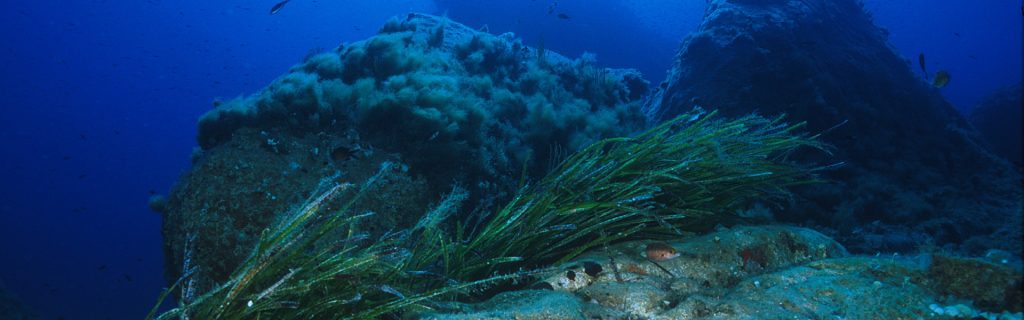
The beautiful rocks on the beaches, the vast prairies of Posidonia oceanica and the widespread marine bioclastic sediments give Capo Carbonara a terrestrial and marine landscape of very high environmental value. It is because of this great value that the MPA has also been recognised as an ASPIM area (Specially Protected Area of Mediterranean Importance) under the Barcelona Convention for the Protection of the Mediterranean Sea against the Risks of Pollution. Its perimeter also coincides almost entirely with the Site of Community Interest Isola dei Cavoli, Serpentara, Punta Molentis and Campulongu established under the Habitats Directive 92/43/EEC and there are several Special Protection Areas (SPAs) established under the Birds Directive 79/409/EEC.
There are numerous beaches overlooking the MPA, a kind of isthmus with the wetland of the Notteri pond at its centre, surrounded by one of the most varied and fascinating coastlines in the Mediterranean.
In the underwater scenery, it is possible to admire the shapes of granite rocks, pinnacles, depressions, clefts and tafoni, often coloured by the yellow of sea daisies or the red of gorgonians, where quiet populations of groupers, dentexes and large giltheads and shoals of Mediterranean barracuda patrol in search of food. Among the marine mammals, in addition to the frequent presence of the coastal dolphin, the bottlenose dolphin, in recent years a few specimens of fin whale, sperm whale, common dolphin and stenella have been spotted in the deeper waters of the Marine Protected Area.
Curiosities Did you know that the Capo Carbonara Marine Protected Area takes its name from the promontory of the same name? It derives from the ancient name of Villasimius, 'Crabonaxa', linked to the use of wood for charcoal production.